
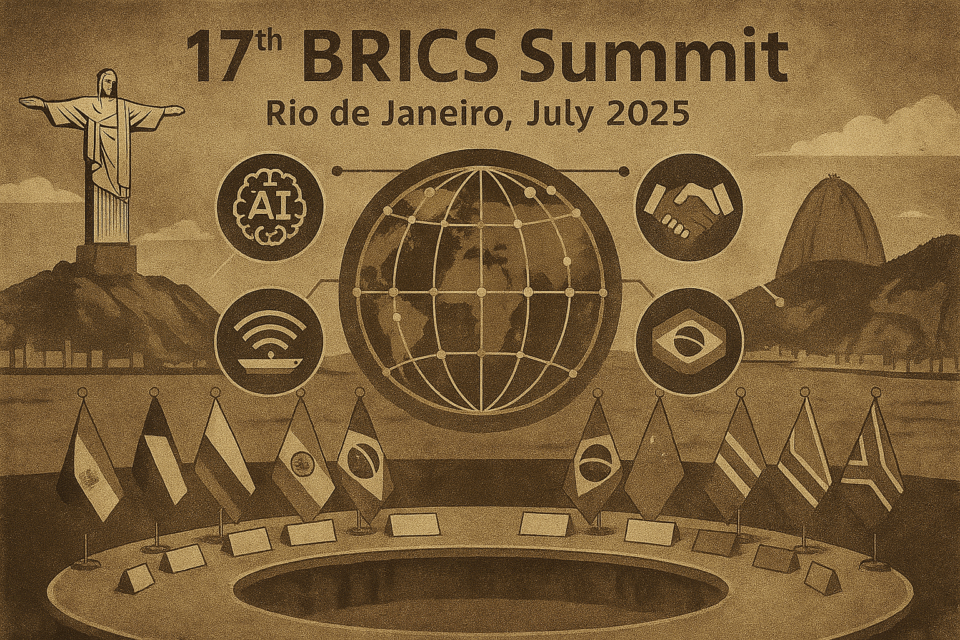
🌍 17th BRICS Summit in Rio: Leaders Push Global South Unity, AI Governance & India’s 2026 Chairship
The 17th BRICS Summit, held in Rio de Janeiro on July 6–7, 2025, marked a powerful step forward in redefining global leadership through the lens of the Global South. Heads of state from Brazil, Russia, India, China, South Africa, and new member nations gathered under the theme:
“Unity in Diversity: Technology, Sovereignty, and South-South Cooperation.”
From shaping global governance to setting ethical standards for artificial intelligence, the summit showcased how BRICS is evolving from a trade bloc into a strategic force reshaping the 21st-century global order.
🌐 What Is BRICS?
BRICS is an international alliance of five major emerging economies:
- Brazil
- Russia
- India
- China
- South Africa
Since its formation in 2009, BRICS has aimed to offer an alternative voice to Western-dominated global institutions. The bloc now includes several new members such as Egypt, Iran, Ethiopia, and the UAE, making its influence even more widespread.
Read Also: India and UK Sign Historic Free Trade Agreement in July 2025
🏛️ Key Highlights from the 17th BRICS Summit
🔹 1. AI Governance Principles Endorsed
Leaders agreed on a set of global principles for responsible AI development and usage, emphasizing:
-
Data sovereignty
-
Ethical AI use aligned with human rights
-
Open-source AI innovation for developing countries
This move positions BRICS as a thought leader in global AI policy, counterbalancing Silicon Valley and EU-led frameworks.
🔹 2. Support for the Global South Intensified
BRICS reaffirmed its commitment to South-South cooperation by:
-
Expanding BRICS Development Bank funding for infrastructure, agriculture, and digital access
-
Advocating for fairer trade rules for developing nations
-
Increasing representation of the Global South in global institutions like the IMF and UN Security Council
🔹 3. India to Chair BRICS in 2026
India was officially confirmed to take over the BRICS presidency in 2026, with a focus on:
-
Fintech and digital public infrastructure
-
Climate-smart agriculture
-
Youth entrepreneurship and innovation hubs across BRICS nations
This gives India a chance to shape the BRICS agenda around inclusive growth, digital transformation, and strategic autonomy.
🇮🇳 What This Means for India
India’s growing leadership role in BRICS signals:
-
Greater geopolitical influence beyond traditional Western alliances
-
Increased trade and tech cooperation with countries across Africa, Latin America, and Asia
-
A platform to push for reform in global governance, especially in the UN, WTO, and IMF
-
Opportunities to lead AI governance efforts, especially in ethical AI and digital inclusion
💼 Benefits for the Global South
-
Access to funding for development projects without conditionalities typical of Western loans
-
Collaboration on local tech solutions, including AI, fintech, and agri-tech
-
Enhanced south-south trade with fewer trade barriers
-
Representation of diverse voices in shaping global standards and economic rules
“BRICS is no longer just about economics—it’s a platform for rewriting the rules of global power,” said one Brazilian diplomat.
📈 Final Thoughts
The 17th BRICS Summit in Rio is a powerful reminder that the Global South is no longer waiting for inclusion—it is demanding it. With India’s 2026 chairmanship, a united push for ethical AI, and strategic investments in development, BRICS is emerging as a credible and coordinated voice in global affairs.
As multipolarity becomes the new norm, BRICS may very well define the future of cooperative, balanced, and inclusive global leadership.
