
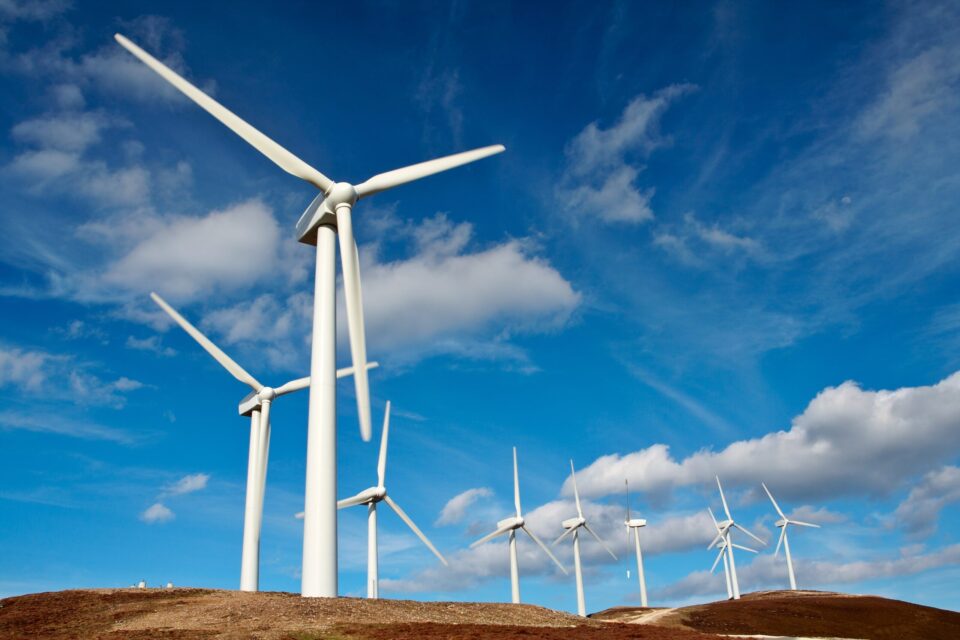
How Global Warming Is Slowing Europe’s Winds & Impacting Energy
Global warming is not just raising temperatures—it’s also slowing wind speeds across Europe, especially during summer. This phenomenon, known as “stilling,” could pose significant challenges for renewable energy systems, as Bloomberg reported.
Why Are Winds Slowing Down?
A study published in Environmental Research Letters highlights that climate change is causing wind speeds to decline due to:
🔹 Warmer land and troposphere (the lowest layer of the atmosphere).
🔹 Changes in temperature gradients affecting air circulation.
🔹 A broader pattern called “global terrestrial stilling”, is also observed in North America and other mid-latitude regions.
According to the research, wind speeds in Europe could drop by up to 5% between 2021 and 2050. While that may seem minor, even small reductions can cause significant fluctuations in wind energy production, says Gan Zhang, a University of Illinois Urbana-Champaign climate scientist.
What This Means for Energy & Climate Goals
Europe has been shifting away from fossil fuels and nuclear power in favour of wind and solar energy. But with lower wind speeds:
❌ Wind power generation may become less reliable.
❌ Energy demand will spike due to hotter summers requiring more cooling.
❌ Winter energy reserves may shrink, as seen with gas shortages during recent cold, windless days.
This shift highlights a new reality—Europe’s energy future won’t just depend on temperature but also wind patterns, says Christopher Vogel, a renewable energy expert at the University of Oxford.
Read Also: Global Warming
Is This a Global Trend?
Research from Yale Environment 360 found that from 1978 to 2010, global wind speeds dropped by 2.3% per decade. However, after 2010, wind speeds slightly increased, suggesting a complex trend.
Despite some fluctuations, the Intergovernmental Panel on Climate Change (IPCC) predicts that by 2100, average wind speeds could drop by up to 10%, further impacting renewable energy generation.
What’s Next?
✔ Further research is needed to understand long-term wind changes.
✔ Energy policies must adapt to potential reductions in wind power.
✔ Diversified renewables will be crucial, including solar, hydro, and storage solutions.
As Europe navigates this evolving climate landscape, the future of renewable energy will depend not just on the sun and wind—but on how well nations adapt to a changing atmosphere.
This article was initially published in Outlookbusiness
