
India Isn’t Just Competing with China—It’s Up Against City Governments
When we analyze China’s economic rise, there’s no shortage of expert opinions. Whether it’s agriculture, technology, space exploration, or electric vehicles, many attribute China’s success to its national leaders’ strategic policies and foresight. This often leads us to believe that a few top-down policies could also transform India’s economic future.
Over the last decade, India’s government—with a strong political mandate—has worked hard on reforms in land, labour, capital, agriculture, and taxation. Yet, India’s economic growth hasn’t mirrored China’s meteoric rise. While China maintained an average per capita growth rate of over 8% for three decades, India has struggled to break beyond 6%, even though it started from a much smaller base.
So, what are we missing?
The Real Reason Behind China’s Economic Boom
Many assume China’s success comes from its top leadership setting policies for specific industries. But that’s only part of the story. The real secret lies in bureaucratic decentralization—giving local governments the power to drive economic growth.
Even though China is a one-party authoritarian state, it is surprisingly more decentralized than India. In China, 51% of total government spending happens at sub-provincial levels, while in India, city governments control less than 3% of government funds. Moreover, Chinese local governments have greater responsibilities, managing unemployment insurance, pensions, and even economic policies at the city level.
Decentralization: The Driving Force of China’s Growth
Deng Xiaoping, China’s former leader, introduced a system of bureaucratic accountability where local leaders were rewarded based on economic growth in their regions. This system, described by political scientist Yuen Yuen Ang as “appointocracy,” allowed cities to experiment with reforms and policies, leading to fierce competition between Chinese cities.
For example, some cities developed Township and Village Enterprises (TVEs), while others focused on foreign investments in Special Economic Zones (SEZs). This “directed improvisation” enabled different regions to pursue the best strategies for growth.
India vs. China: The Power of City Governments
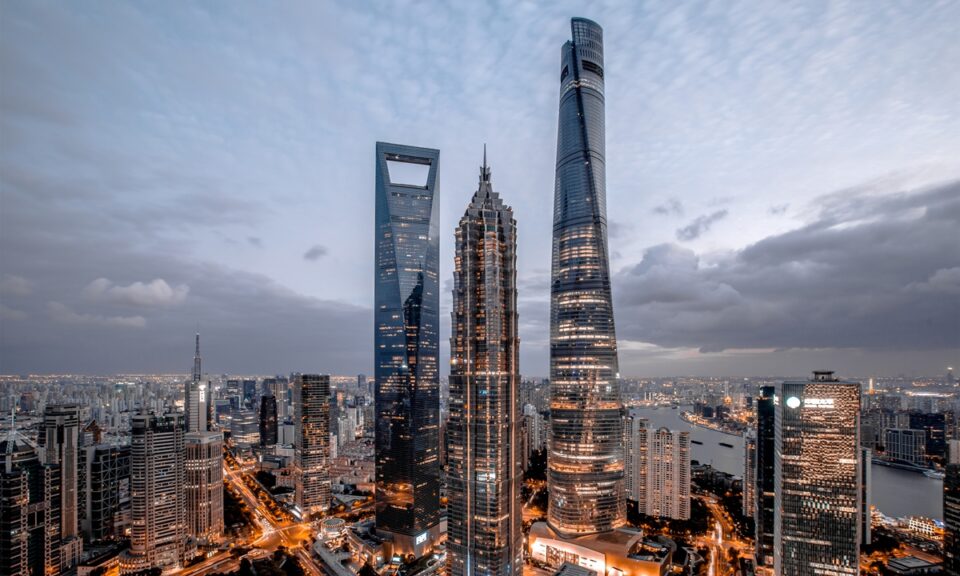
A quick look at Chinese cities shows how much economic autonomy they have compared to Indian metros. Take Shanghai—it operates at the same level as a province and has full control over its economic development strategy. The city has clearly identified three key industries for growth:
- Semiconductors (Chips)
- Biopharmaceuticals
- Artificial Intelligence (AI)
After setting these priorities, Shanghai’s municipal government—not Beijing—launched a $1.4 billion fund in 2024 to support businesses in these sectors. Even major corporations like SAIC Motor Corp. (owner of MG Motors) and SMIC (China’s semiconductor giant) have received funding from Shanghai’s city government, not the central government.
Similarly, Chongqing—another major city—has its own foreign affairs office to manage international economic ties and a science & technology bureau to support innovation.
Now, compare this with Mumbai or Bengaluru. Indian cities have very little power to shape their own economic policies. They rely heavily on state and central governments for funding and decision-making, limiting their ability to compete on a global scale.
Also Read: Political Analysis
The Downside of China’s Model
Of course, China’s decentralization isn’t perfect. Its investment-heavy model has led to problems like financial overextension and industrial overcapacity. In recent years, the central government has also tightened control, reducing the flexibility that local governments once had.
This has led to inefficient investments—China is now pouring money into industries where it doesn’t have a natural advantage. According to The Economist, 30% of all industrial firms in China were making losses by mid-2024, highlighting the risks of unchecked investment.
What India Can Learn
China’s success shows that economic growth isn’t just about strong central policies—it’s also about empowering local governments. If India wants to accelerate its growth, it needs to:
- Decentralize Economic Power – Allow cities to control more of their budgets and make independent policy decisions.
- Encourage City-Level Competition—Let metros like Mumbai, Delhi, and Bengaluru compete for industries like Shanghai and Shenzhen do.
- Give Local Governments More Responsibility—In addition to urban planning, local governments should manage economic development, unemployment insurance, and investment policies.
China’s rise wasn’t just about its central government—it was driven by ambitious cities competing on a global stage. If India wants to follow a similar path, it must rethink how much power it gives its local governments.
Article source reference: ThePrint
