
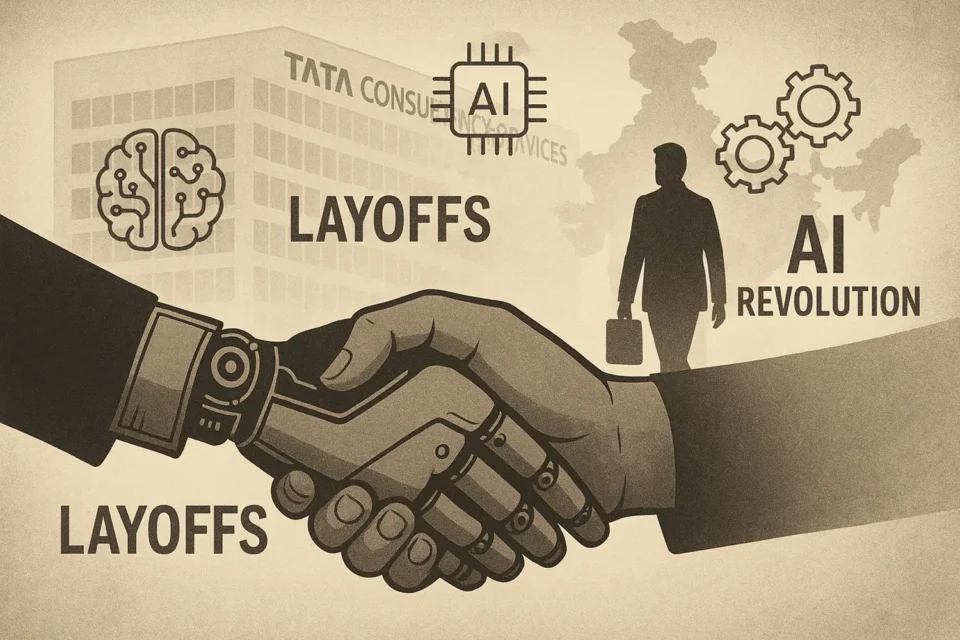
TCS to Lay Off 12,000 Employees: India’s IT Sector Moves Toward AI and Automation
In a major shake-up for India’s IT industry, Tata Consultancy Services (TCS), the country’s largest IT services provider, is reportedly planning to lay off around 12,000 employees. This significant workforce reduction marks a pivotal shift from traditional, labor-intensive operations to AI-driven automation—signaling a new era for India’s tech giants.
What is TCS and What Does It Do?
Tata Consultancy Services (TCS), a subsidiary of the Tata Group, is one of the world’s leading IT services, consulting, and business solutions organizations. Headquartered in Mumbai, TCS operates in over 50 countries and serves a wide range of industries including finance, healthcare, retail, and manufacturing. The company provides services such as:
-
Software development and maintenance
-
Cloud computing and IT infrastructure management
-
Enterprise solutions (ERP, CRM, etc.)
-
Data analytics and artificial intelligence
-
Cybersecurity and quality engineering
As of 2025, TCS employs over 600,000 people globally and has long been seen as a bellwether for India’s $250+ billion IT services industry.
The Layoffs: A Shift in Strategy
According to internal sources and media reports, TCS is preparing to lay off approximately 12,000 employees—primarily from middle and junior roles that are now being rendered redundant due to the increasing use of automation and AI technologies. While the company has not officially confirmed the exact numbers, the news aligns with recent trends in the global IT sector.
Why the shift?
The move reflects a broader transformation within the Indian IT sector, where companies are now prioritizing automation, machine learning, and cloud-based platforms over traditional manual coding and support tasks. TCS, like many of its competitors, is investing heavily in AI-driven tools, reducing the need for large human teams to perform routine tasks.
AI Replacing the Legacy IT Model
For decades, India’s IT boom thrived on a model that relied heavily on low-cost, large-scale human resources. However, with the rise of generative AI, robotic process automation (RPA), and intelligent analytics, that model is rapidly evolving.
-
Repetitive IT support tasks are now being handled by AI bots.
-
Code generation and bug-fixing are increasingly automated.
-
Clients are demanding faster turnaround times with lower headcounts.
This technological shift is compelling companies like TCS to restructure their workforce and re-skill existing talent for high-demand areas like AI engineering, data science, cybersecurity, and cloud architecture.
Impact on India’s IT Workforce
The planned layoffs have sparked concern among employees, especially those in roles susceptible to automation. However, TCS has emphasized that it is also hiring aggressively in emerging areas, with plans to onboard fresh talent equipped with skills in AI, cloud computing, and digital transformation.
Still, for thousands of experienced IT professionals, this change represents a wake-up call.
“The future of IT work is not about how many people you have, but how intelligent your systems are,” said a senior industry analyst.
What This Means for the Indian IT Sector
TCS’s move is likely to set a precedent for other Indian IT giants like Infosys, Wipro, and HCLTech. As global clients demand more value with less effort, automation will continue to reshape the workforce.
Key Takeaways:
-
TCS is reportedly laying off 12,000 employees as part of an AI-driven restructuring strategy.
-
Marks a shift from manual, people-heavy models to automation and smart technologies.
-
Reflects the growing impact of artificial intelligence on the future of work in India.
-
Signals the need for upskilling and re-skilling in emerging technologies.
Final Thoughts
Digital transformation is no longer just a buzzword—it’s a business imperative. TCS’s workforce optimization move underscores the new normal in IT services, where quality and efficiency are powered more by algorithms than armies of engineers.
For job seekers and professionals in the tech space, now is the time to invest in future-proof skills that align with AI, data, cloud, and cybersecurity. Because the future of India’s IT isn’t about size—it’s about smarts.
