
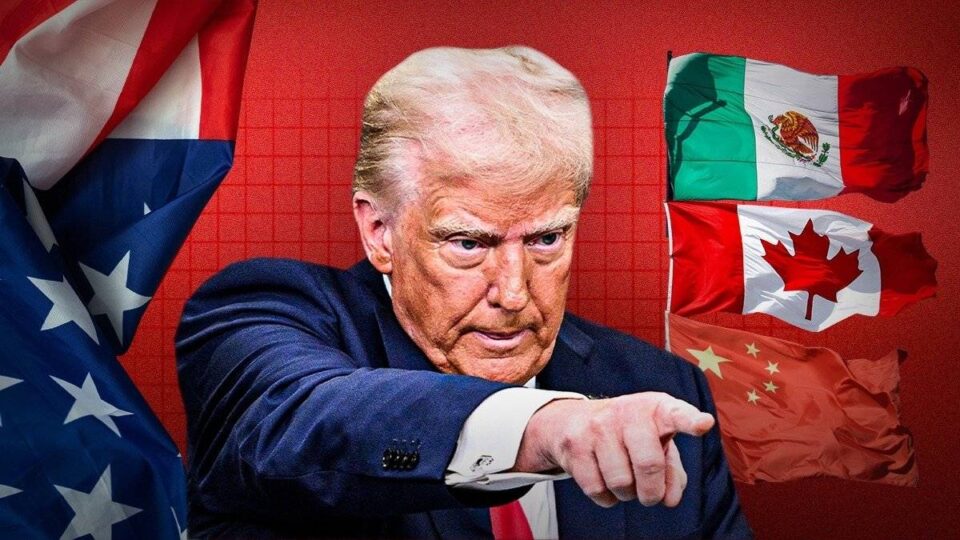
Trump’s New Tariffs Ignite Global Trade War: China Hit With 104% Duties
In a move that has sent shockwaves through international markets, former U.S. President Donald Trump has introduced a fresh round of tariffs targeting Chinese imports, with some reaching a staggering 104%. The decision is widely seen as a dramatic escalation of the ongoing trade war between the world’s two largest economies, reigniting fears of a prolonged global economic slowdown.
A Strategic Blow to China
The new tariffs are primarily aimed at key Chinese industries, including steel, aluminium, electric vehicles (EVs), and semiconductors. The 104% tariff, which affects a specific category of electric cars and battery components, is the most severe yet, signalling a strategic effort to limit China’s dominance in emerging technologies and manufacturing.
According to Trump, the move is intended to protect American jobs and industries from what he calls China’s “unfair trade practices. “We will no longer stand by as China manipulates trade rules and floods our markets with cheap, subsidized goods,” he stated during a press conference. He further accused Beijing of intellectual property theft and currency manipulation—allegations that have long fueled U.S.-China trade tensions.
A Resurgence of Trump’s ‘America First’ Trade Policy
Trump’s tariffs continue his “America First” economic policy, which was a central pillar of his 2016 presidential campaign and his time in office. During his presidency, Trump launched a series of trade measures against various countries, but China remained the primary target. These latest tariffs suggest that he remains committed to reshaping the global trade order in favour of domestic manufacturing and production.
Analysts suggest the move is also politically motivated. With the 2024 U.S. presidential election still fresh in memory, Trump aims to galvanize his support base by doubling down on economic nationalism. The tariffs, while controversial, resonate with many voters who feel that globalization has undermined American industry and employment.
Immediate Market Reactions
Global markets reacted swiftly to the news. Wall Street saw a dip in major indices, with tech and auto stocks taking the most brutal hit. Meanwhile, Asian markets tumbled, with the Shanghai Composite falling by over 2% amid fears of economic retaliation from China.
The yuan also weakened against the dollar as investors feared the potential fallout. Economists warned that these tariffs could trigger inflationary pressures in the U.S., as American businesses and consumers will likely face higher costs for goods sourced from China.
“The market sees this as a significant disruption to the global supply chain,” said Jonathan Meyers, a senior economist at Global Trade Insights. “If China responds in kind, we could be looking at a renewed period of trade instability, rising costs, and slowed growth.”
China’s Response
China has vowed to retaliate strongly. In a statement from the Ministry of Commerce, Beijing condemned the tariffs as “unilateral and protectionist” and hinted at imposing countermeasures. Chinese officials have also indicated that they may file a formal complaint with the World Trade Organization (WTO).
“We will take all necessary steps to defend the interests of Chinese businesses,” the statement read. “Such actions undermine the principles of free trade and multilateralism.”
Beijing may target key American exports such as agricultural products, aircraft, and technology components—areas vulnerable in previous rounds of the trade war.
Global Implications
The renewed trade tensions between the U.S. and China will likely have global ramifications. Many countries relying on trade with both economic giants may be caught in the crossfire. Supply chains could be severely disrupted, particularly in sectors like electronics, automotive, and green technology.
Additionally, the tariffs threaten to destabilize ongoing efforts to revive global economic growth following the COVID-19 pandemic. International organizations like the International Monetary Fund (IMF) and the World Bank have repeatedly warned against protectionist policies, arguing that they hinder recovery and create uncertainty in international markets.
ALSO READ: Breaking News
Winners and Losers
While the U.S. government argues that the tariffs will protect American jobs, critics say the long-term impact may be counterproductive. Higher import costs could lead to increased consumer prices, potentially negating any benefits to domestic manufacturers. Additionally, U.S. companies with deep ties to China may suffer from reduced access to Chinese markets or retaliatory tariffs.
On the other hand, some sectors in the U.S., particularly domestic steel and aluminium producers, may benefit from reduced foreign competition. This could lead to increased production and investment in these industries, at least in the short term.
However, the broader economic consensus is that trade wars typically result in more harm than good. “History has shown that tariffs rarely achieve their intended goals without significant collateral damage,” said Sarah Liu, a professor of international economics at Georgetown University. “They may offer short-term political wins, but the economic costs often outweigh the benefits.”
What Comes Next?
With tensions rising, all eyes are on both nations’ next steps. Will China respond with its tariffs? Will there be room for negotiation, or is this the beginning of a prolonged trade standoff?
Some experts believe that backdoor diplomatic channels may still offer a path to de-escalation. Others argue that any resolution could be a long way off with Trump doubling down on his protectionist policies.
What is certain is that the global economy is entering a new phase of uncertainty. The U.S.-China trade war, once simmering, is now boiling again—and the world is watching closely.
